
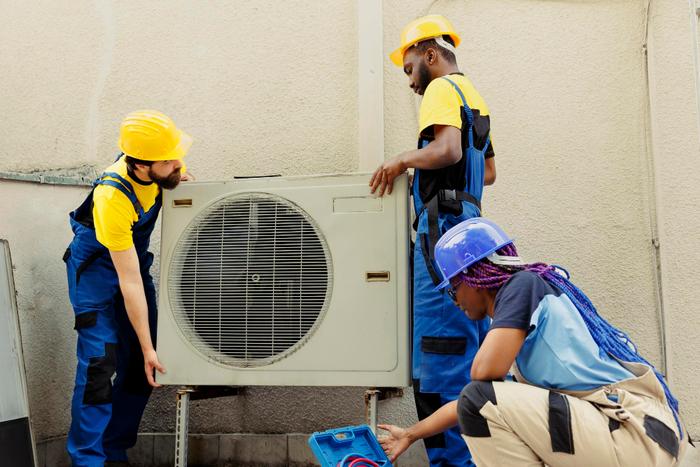
If your AC stops cooling in Florida, start with a few basic checks: the thermostat, air filter, circuit breaker, and airflow. If the system is still blowing warm air, repeatedly shutting off, leaking water, making unusual noises, or showing signs of an electrical problem, it’s time to have a qualified technician diagnose it.
Some AC problems can worsen when the system continues to operate under abnormal conditions. Getting the problem diagnosed promptly can help identify the cause before it leads to additional equipment damage, prolonged discomfort, or a more complicated repair.
What Should You Check When Your AC Stops Cooling?
Call right away if your system suddenly stops heating or cooling, starts making noises it shouldn’t, smells like something’s burning, leaks, or keeps tripping the breaker. Catching it early is usually the difference between a quick repair and a much bigger bill.
Check the thermostat
Make sure it’s set to cooling mode and the temperature setting is below the current indoor temperature.
Check the air filter
A heavily loaded filter can restrict airflow. Replace or clean it according to the manufacturer’s instructions.
Check the breaker
If the AC has lost power, check whether the appropriate breaker has tripped. If it trips again, don’t keep resetting it; arrange professional service.
Check the vents
Make sure supply and return vents aren’t blocked by furniture or other objects.
Check the outdoor unit
Look for obvious debris or obstructions around the equipment. Don’t remove electrical panels or attempt electrical repairs yourself.
Ignoring these signs puts real strain on parts like the compressor, blower motor, or the wiring itself. At Cool Breeze Air Conditioning, we get to homeowners fast to restore comfort and head off the kind of damage that gets expensive.
What Are the Most Common Signs That Your HVAC System Needs Emergency Repair?
Some symptoms warrant prompt professional attention because they may indicate an electrical, mechanical, refrigerant, or drainage problem.
- No cooling even though the system is running
- Loud grinding, banging, or screeching noises
- Water leaking around the indoor equipment
- A burning or electrical odor
- Repeated circuit-breaker trips
- Very weak or no airflow
- A system that repeatedly shuts itself off
If you notice a burning odor, repeated breaker trips, significant water leakage, or another potentially serious problem, turn the system off as appropriate and arrange professional service.
Why You Shouldn’t Ignore an AC That Isn’t Cooling
An AC that isn’t cooling normally should not simply be ignored. Depending on the cause, continued operation can place additional stress on components or allow a drainage, electrical, airflow, or mechanical problem to become more complicated.
The underlying cause matters. Restricted airflow, refrigerant problems, electrical faults, and failing mechanical components can all produce cooling problems, but they require different repairs. That’s why diagnosing the cause is more useful than simply replacing the first component that appears faulty.
In Florida’s heat, a loss of reliable cooling can also become a significant comfort issue, particularly during periods of extreme temperatures.
How Can Florida Homeowners Reduce the Risk of AC Breakdowns?
Routine maintenance can help identify developing problems before they become larger equipment issues. The appropriate maintenance schedule depends on the system, its condition, how heavily it is used, and manufacturer recommendations.
Between professional visits, homeowners can check filters according to manufacturer recommendations, keep debris away from the outdoor unit, make sure vents remain unobstructed, and pay attention to changes in cooling, airflow, sounds, or odors. Even well-maintained systems can develop unexpected problems, so knowing which HVAC company to contact can be useful when cooling fails during extreme weather.
Frequently Asked Questions
Should I turn off my HVAC system if it smells burning?
Turn it off right away. Running it while it smells like something’s burning raises the risk of electrical damage or fire. Get a technician to check it out before switching it back on.
Can an HVAC leak become an emergency?
It can. A water leak can damage your walls or flooring, and a refrigerant leak can hurt your cooling performance and create safety concerns. Getting it fixed quickly limits the damage and gets the system running properly again.
How quickly should emergency HVAC repairs be scheduled?
As soon as you notice something’s seriously wrong. Even waiting a few hours can let a mechanical issue get worse, push up the repair cost, and leave your home without reliable heating or cooling in the meantime.
Is emergency HVAC repair more affordable than replacing the system?
Usually, yes. Fixing a problem while it’s still small tends to cost a lot less than replacing major parts or the whole system. Getting it handled early also helps your equipment last longer and lowers the odds of a total breakdown.
Conclusion
When an AC stops cooling in Florida, start with the basic checks you can safely perform yourself. If the system continues blowing warm air or shows signs of an electrical, mechanical, or drainage problem, professional diagnosis is the next step. Don’t continue operating a system that is showing potentially serious symptoms such as a burning odor, repeated breaker trips, significant water leakage, or unusual mechanical noises.
Cool-Breeze Air Conditioning provides residential AC repair and 24/7 service across Central and South Florida. If basic troubleshooting doesn’t restore cooling, or your system shows signs of a more serious problem, professional service can help identify the cause and determine the appropriate repair.


