
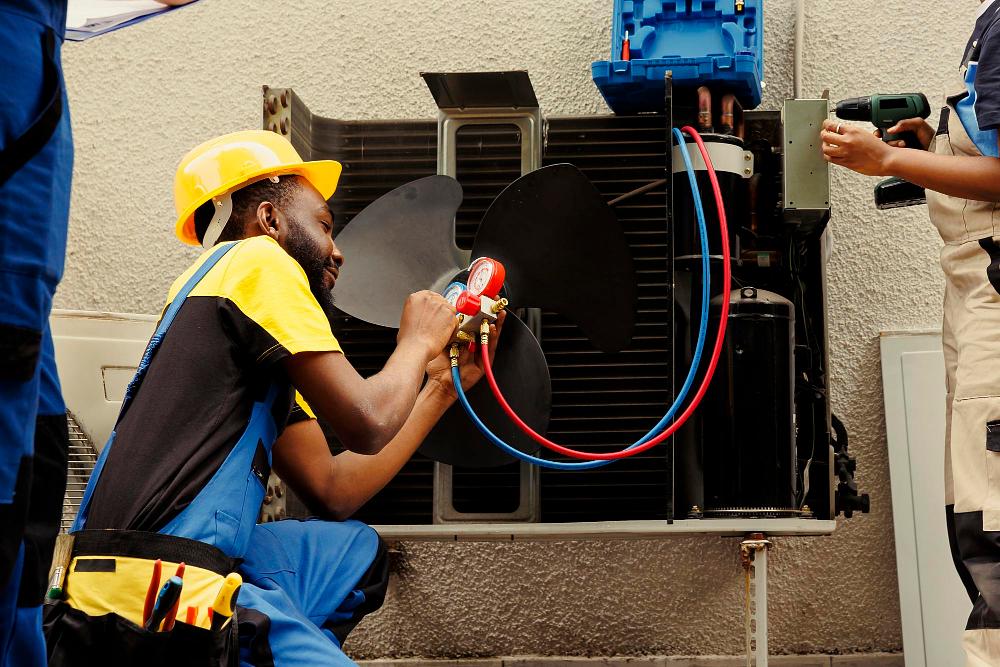
AC repair costs in Miami can range from a little over $100 for some minor repairs to several thousand dollars for major component failures. Where you land depends on which part failed, how much labor the job requires, the age and accessibility of the system, and the refrigerant it uses. The only way to know your actual cost is to have the unit inspected. The ranges below are illustrative Miami-area figures, not a quote for your particular system.
How Much Does AC Repair Cost in Miami?
There’s no flat rate because no two service calls look the same. A diagnostic or service visit may cost anywhere from roughly $75 to $250, depending on the company and service. Simple electrical component replacements, such as capacitors or contactors, generally fall in the low hundreds. More involved repairs involving blower motors, evaporator coils, refrigerant leaks, or compressors can reach into the thousands.
Current Miami and South Florida pricing guides show that actual ranges vary by provider and repair.
The final number can also depend on the equipment brand, how accessible the unit is, whether the needed part is readily available, what refrigerant the system uses, and whether the work takes place during regular hours or as an after-hours or emergency call.
What Do Common AC Repairs Cost in Miami?
The following are illustrative Miami-area ranges, based on currently published local pricing guides. They are not guaranteed prices, and different companies may quote differently for the same type of repair.
| Repair | Illustrative Miami-area range* |
| Diagnostic or service visit | $75–$250 |
| Condensate drain clearing | $100–$300 |
| Capacitor replacement | $150–$450 |
| Contactor replacement | $150–$500 |
| Thermostat replacement | $150–$500 |
| Refrigerant leak diagnosis, repair, and recharge | $200–$1,500+ |
| Blower or fan motor replacement | $300–$900 |
| Evaporator coil replacement | $700–$2,500+ |
| Compressor replacement | $1,200–$3,000+ |
*These are illustrative ranges only, not guaranteed prices. Published Miami and South Florida cost guides vary in their specific figures depending on the source, equipment, and time period. Actual pricing depends on the exact repair, labor, parts availability, accessibility, refrigerant type, and other job-specific factors. An on-site diagnosis is the best way to establish the actual cost.
Electrical and drainage repairs often fall toward the lower end of the range, although the final cost depends on the underlying problem, parts, labor, and accessibility. Compressor or coil failures generally cost more because they involve more expensive components and more specialized labor.
What Factors Affect AC Repair Costs in Miami?
Several factors can push the cost of an AC repair up or down:
- The failed component. A capacitor replacement and a compressor replacement are very different jobs.
- Labor. More complex repairs take more time and may require specialized skills or equipment.
- Age of the system. Older equipment may require parts that are harder to source or no longer manufactured.
- Parts availability. Special-order components can increase both the wait and the cost.
- Accessibility. Equipment in a tight attic, closet, or other difficult-to-reach location can require additional labor.
- Refrigerant type. If a system is low on refrigerant, the cause should be diagnosed rather than simply assuming it needs a recharge. Refrigerant is not consumed during normal operation, so a low charge can indicate a leak or another system issue. Older systems using R-22 can also be more expensive to service because new production and import of R-22 have been phased out. Existing R-22 equipment can still be serviced, but supplies rely on previously produced, recovered, or reclaimed refrigerants.
- Timing. After-hours, weekend, or emergency service may carry additional charges.
- Warranty coverage. A component may still have manufacturer or other applicable warranty coverage, which can affect what the homeowner pays.
A technician evaluating the specific system can determine which of these factors actually apply to the repair.
How Does Miami’s Climate Affect AC Repair Needs?
Miami’s warm climate means residential AC systems can see substantial cooling demand for much of the year. More operating time can contribute to normal wear on components such as motors, capacitors, electrical connections, and other system parts.
Humidity is another consideration. Air conditioners remove moisture from indoor air as they cool, so condensate drainage is an important part of normal operation in Miami’s humid climate. A blocked or slow-draining condensate line can cause water-related problems and may require service.
Homes closer to the coast may also have greater exposure to salt-laden air, which can contribute to corrosion of outdoor equipment. The effect varies based on the property’s location, equipment, exposure, age, and maintenance, so coastal conditions do not affect every Miami-area system in the same way.
These conditions do not mean every homeowner will experience the same repairs. They simply provide useful context when considering the age, condition, and maintenance history of an AC system.
Can Regular Maintenance Help Reduce AC Repair Costs?
Maintenance cannot prevent every breakdown, but it can help identify issues such as partially clogged drains, dirty coils, or weakening electrical connections before they develop into more complicated problems.
A maintenance visit may include inspection and service of several components involved in normal system operation. For a fuller look at AC maintenance and recommended service intervals, see our AC maintenance guide. This article focuses specifically on repair costs.
When Should You Repair or Replace an Older AC System?
If a system is otherwise reliable and the problem is isolated to one component, repairing it may be the simpler option. Replacement becomes worth considering when breakdowns become frequent, efficiency has declined, the system is older, or a major component fails.
A repair generally costs less upfront than replacing an entire AC system, but that does not automatically make repair the better long-term choice. The decision depends on the system’s age and condition, repair history, efficiency, remaining warranty coverage, and how the current repair cost compares with the likely cost of continued repairs.
For a closer look at that decision, see our $5,000 Rule for Air Conditioning article, which addresses when replacement may start to make more financial sense than continued repairs.
What Should a Miami AC Repair Estimate Include?
Before approving a significant repair, ask the contractor to explain what is included in the estimate.
Depending on the job, the estimate may identify:
- Diagnostic or service fees
- Parts and replacement components
- Labor
- Refrigerant or other materials, if required
- After-hours or emergency charges
- Applicable warranty coverage
- Any other fees associated with the repair
An itemized estimate also gives you an opportunity to ask why a particular repair is being recommended and whether there are other reasonable options.
How Can Miami Homeowners Avoid Unexpected AC Repair Costs?
A few simple habits can help homeowners identify developing problems before they become larger service issues:
- Replace or clean filters according to the manufacturer’s recommendations.
- Keep leaves, grass clippings, and other debris away from the outdoor unit.
- Pay attention to changes in airflow, unusual noises, uneven cooling, or water pooling near the indoor unit.
- Don’t ignore a developing performance problem until the system stops working completely.
- Before approving a major repair, ask for a written estimate that separates parts, labor, diagnostic fees, and any after-hours charges.
Frequently Asked Questions
Is AC repair usually cheaper than replacing an AC system?
Repair generally costs less upfront, but that does not automatically make it the better long-term option. The right decision depends on the system’s age and condition, repair history, efficiency, warranty coverage, and the size of the repair relative to the likely cost of continued repairs.
What is usually the most expensive AC repair?
Compressor and evaporator coil replacements are often among the more expensive residential AC repairs because they involve costly components and specialized labor. The actual price depends on the equipment, refrigerant, accessibility, and the complexity of the job.
Does Miami’s humidity affect AC repair needs?
It can. Air conditioning systems in humid conditions remove moisture from indoor air, making condensate drainage an important part of normal operation. A clogged drain line or dirty coil can affect system performance and may require service.
Do emergency AC repairs cost more?
Often, yes. Some companies charge additional fees for after-hours, weekend, or emergency service. Ask whether those charges apply before approving the work.
How can I tell whether a repair estimate is reasonable?
Ask for an itemized breakdown of parts, labor, and additional fees. You can also ask the technician to explain what specifically failed, why the recommended repair is necessary, and whether there are alternative repair or replacement options. Comparing estimates can be useful for major repairs, provided each estimate covers the same work.
Conclusion
In Miami, a minor AC repair might cost a few hundred dollars, while a major component failure can reach into the thousands. What you actually pay depends on the part that failed, the labor involved, the age and accessibility of the system, the refrigerant it uses, and other job-specific factors.
The most reliable next step is an on-site diagnosis and written estimate based on the actual condition of your equipment rather than relying on a general price range.
At Cool-Breeze Air Conditioning, our technicians diagnose the problem, explain the repair options, and provide recommendations based on the condition of your system. If your AC needs attention, a professional evaluation can help you understand the repair and its expected cost before you authorize the work.


