
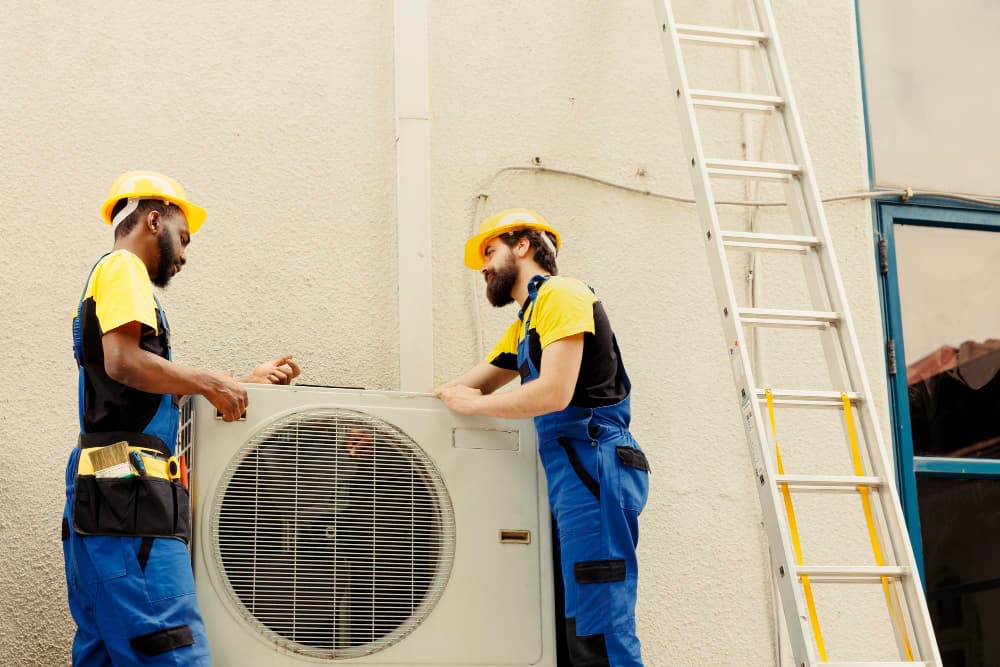
Commercial HVAC work takes more planning than swapping in a new air conditioner. A business might need a full system for a new building, replacement equipment, added cooling capacity, or changes to existing ductwork. Because these systems affect comfort, energy costs, and day-to-day operations, installation should go to someone with real experience, not a general handyman.
When you’re searching for who installs commercial HVAC systems in Miami, look for a contractor with commercial experience, the right qualifications and a solid grasp of Miami’s hot, humid climate. Professional installation is what makes sure equipment is sized, connected, and configured correctly from day one.
At Cool-Breeze Air Conditioning, we handle commercial HVAC installation and have experience with systems ranging from smaller commercial equipment to large-scale cooling systems.
Why do commercial HVAC projects require professional installation?
Commercial systems are bigger and usually more complicated than what you’d find in a house. A contractor has to account for the building’s size, layout, occupancy, airflow, and cooling needs before any equipment goes in.
Get the sizing wrong, or install it poorly, and you end up with uneven temperatures, higher energy bills, and equipment that keeps breaking down. Professional installation also covers the less visible stuff, electrical connections, refrigerant lines, controls, ductwork, the parts that cause headaches later if they’re not done right the first time.
For a business, getting the installation right from the start avoids a lot of unnecessary repairs and disruption later on.
Which commercial HVAC projects need professional installation?
Major commercial HVAC projects generally require a qualified contractor, especially when new equipment or significant system changes are involved.
Common projects include;
- New HVAC installations
- Replacement of outdated equipment
- Rooftop unit installation
- HVAC for new construction
- Ductwork installation or modifications
- Multi-zone cooling systems
- Ventilation upgrades
- Commercial air-conditioning replacements
- HVAC system expansions
When choosing a commercial HVAC installer in Miami, check that the contractor has handled the specific type and size of project your business needs, not just similar work in general.
When does a new commercial building need HVAC installation?
Planning should start early in construction, not once the walls are up. The system needs to match the building’s size, layout, purpose, and expected occupancy.
An office, a restaurant, a retail store, and a warehouse all cool very differently. Restaurants especially need extra ventilation and exhaust systems because of the cooking equipment running all day.
Bringing HVAC planning in early lets equipment, ductwork, electrical connections, and controls get coordinated with the rest of construction. That coordination is what keeps you from paying for costly changes later.
When should an existing commercial HVAC system be replaced?
Replacement makes sense when equipment is old, unreliable, inefficient, or needs constant repairs. But age by itself isn’t always a reason to replace the whole thing.
A proper inspection can tell you whether repairing what you have, upgrading a few components, or installing new equipment altogether is the smarter move.
Businesses researching who installs commercial HVAC systems in Miami should look for a contractor that actually evaluates the current system before jumping straight to a replacement recommendation. That step alone can save a lot of unnecessary spending.
What commercial HVAC systems work well in Miami?
Commercial properties might use rooftop units, packaged systems, split systems, heat pumps, or larger central cooling systems. Which one fits depends on the building and how it’s used day to day.
Miami’s heat and humidity make equipment selection matter more than it might elsewhere. Commercial systems in this climate often run for long stretches, so they need to deliver steady cooling while keeping indoor humidity in check.
Sizing matters just as much. An undersized system struggles once the weather turns brutal, while an oversized one cycles on and off too often and affects humidity control.
How does professional installation improve commercial HVAC performance?
Professional installation lets equipment run the way it was designed to. Airflow, electrical connections, refrigerant handling, and system controls all shape how well it actually performs.
Installation quality also affects how long things last. Poorly connected components, or blocked airflow put extra strain on the equipment and lead to problems that were entirely avoidable.
Businesses investing in commercial HVAC systems in Miami should treat installation quality as part of the investment itself, not an afterthought tacked on once the equipment’s already purchased.
What should businesses consider before an HVAC project?
Before any work starts, businesses should understand their cooling needs and the full scope of the project. A contractor should walk the building and explain what equipment and changes will actually be required.
Key things to think through:
- Building size and layout
- Number of occupants
- Existing ductwork
- Electrical capacity
- Equipment location
- Ventilation needs
- Maintenance access
- Energy efficiency
- Project schedule
These details are what let a contractor recommend commercial HVAC systems suited to your property, instead of pushing a one-size-fits-all setup.
Can commercial HVAC installation be completed without disrupting business?
Sometimes. It really depends on the size and complexity of the project. Swapping one unit might barely cause a ripple, while a full installation can mean temporary shutdowns or restricted access to parts of the building.
Talk through scheduling with the contractor before anything starts. Installation can often be planned around customer traffic, staff schedules, and operating hours so the disruption stays minimal.
For businesses asking who installs commercial HVAC systems in Miami, project coordination matters just as much as technical skill. A good installer works around your operations, not the other way around.
Who installs commercial HVAC systems in Miami?
We provide commercial HVAC installation, replacement, and related cooling services for businesses in South Florida. Our team works with commercial systems and can help businesses determine the right approach for their property and equipment needs.
A reputable contractor should walk you through the equipment, installation process, timeline, and warranty before any work begins.
When you’re comparing contractors, consider commercial enstalls commercial HVAC systems in Miami experience, licensing, insurance, warranties, and ongoing maintenance support together, not any single factor on its own.
How can a business choose the right HVAC installer?
Compare contractors on experience, qualifications, services, and what’s actually spelled out in their proposals. Price matters, sure, but it shouldn’t be the only thing driving the decision.
A written proposal should cover the equipment, installation work, timeline, warranty, and any extra requirements. Ask directly whether electrical work, duct modifications, or other building changes are part of the deal.
It’s worth asking about maintenance after installation too. Regular service protects a commercial HVAC investment, and catches developing problems before they interrupt business operations.
At Cool-Breeze Air Conditioning, businesses can talk through their property’s requirements and figure out the right approach for their specific HVAC project.
Frequently asked questions
Who installs commercial HVAC systems in Miami?
At Cool-Breeze Air Conditioning, we provide commercial HVAC installation and replacement services for businesses in South Florida. Our team can help evaluate the property, equipment needs, installation requirements, and ongoing maintenance considerations.
How long does commercial HVAC installation take?
It depends on the equipment, building size, accessibility, and how complex the project is. Swapping one rooftop unit takes far less time than installing a complete system in a new building. A contractor can give you a more accurate timeline once they’ve inspected the property.
Are commercial HVAC systems different from residential systems?
Yes. Commercial HVAC systems are generally built for larger buildings and more complex cooling demands. They often serve multiple zones and include bigger equipment, specialized controls, and more involved ventilation. They also have to account for occupancy and how the building actually gets used.
How often should commercial HVAC systems be maintained?
It depends on the equipment type, how heavily it’s used, and manufacturer recommendations. Cool-Breeze recommends commercial HVAC maintenance twice a year to help identify developing problems and keep systems operating reliably. Regular inspections catch airflow problems and worn components before they turn into expensive breakdowns.
Can an existing commercial HVAC system be upgraded?
Yes. Some systems can be improved through updated controls, component replacement, ductwork changes, or efficiency upgrades. A professional inspection can tell you whether upgrading makes sense or whether a full replacement offers better long-term value.


