
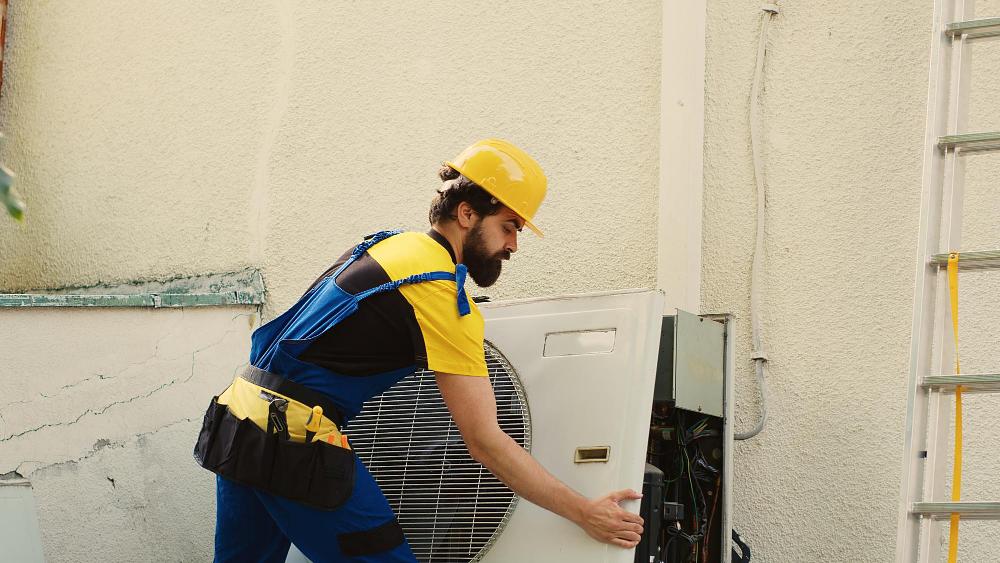
Before hiring an AC repair company in Florida, you can verify the contractor’s licensing information through the Florida Department of Business and Professional Regulation (DBPR). The state’s online license search allows consumers to search by name, license number, city or county, or license type. Checking the state record lets you compare the information a company provides with the licensing information maintained by Florida before you authorize repair work.
Why Does an AC Repair Company’s License Matter in Florida?
Florida regulates air-conditioning contractors under Chapter 489 of the Florida Statutes, which establishes different contractor classifications and scopes of work.
For example, a Class A air-conditioning contractor has a broad scope that includes installing, maintaining, repairing, altering, extending, and designing central air-conditioning, refrigeration, heating, and ventilating systems, subject to the limitations in Florida law. A Class B air-conditioning contractor has a more limited scope, including a limit of 25 tons of cooling and 500,000 Btu of heating in any one system.
Florida also distinguishes between certified contractors and registered contractors. Certification is issued by the state and authorizes a contractor to work within the applicable classification statewide. Registration is tied to authorization to work within specified local jurisdictions.
That makes license verification a useful first step when hiring an HVAC contractor. Instead of relying only on a company’s description of its experience or credentials, you can check the contractor’s licensing information through the state’s own database.
How Do You Check an AC Contractor’s License in Florida?
Before scheduling repair work, ask the company for its Florida contractor license number. Then:
- Search the license number using the DBPR’s online license lookup tool.
- Check the name associated with the license.
- Compare that information with the company providing your estimate.
- Review the license status shown in the state database.
- Check the contractor classification to make sure it is appropriate for the work being performed.
If the company gives you a license number but the state record shows a different licensee or business relationship, ask the company to explain the discrepancy before approving work.
What Information Should Match Between the License and the Company?
License verification is more than confirming that a number exists. Compare the information in the state record with the company you’re hiring.
Look at:
- Licensee or contractor name– Who holds the license?
- Business relationship– If the work is being performed through a company, does the DBPR record identify that business and its qualifying agent?
- License number– Does the number match the information provided by the contractor?
- Classification– Is the contractor licensed for the type and scope of work involved?
- Status– Does the DBPR record show the license as current?
A license number printed on an estimate, invoice, vehicle, or website is not the same as independently verifying that information. The state’s licensing database provides the record you should check.
Does “Licensed and Insured” Mean the Same Thing?
No. Licensing and insurance are separate.
A contractor license relates to the contractor’s authorization and classification under Florida’s contracting regulations. Insurance is separate protection that can address risks associated with the company’s work, such as certain liability, property damage, or worker-related claims, depending on the coverage.
When vetting an HVAC company, ask about both. Verify the contractor’s license through DBPR, and separately ask the company what insurance coverage it carries and whether documentation is available.
What Are Red Flags When Verifying an AC Contractor?
Some warning signs are straightforward to check:
- The company will not provide a license number when asked.
- The license information does not match the contractor or business relationship shown in the state record.
- The DBPR record does not show the expected current status.
- The company is unclear about which contractor or business will actually perform the work.
- You’re pressured to approve significant repairs before the problem has been clearly explained.
- The written estimate does not clearly identify the company performing the work.
None of these circumstances alone establishes that a contractor has violated Florida law. However, they are reasons to pause, ask questions, and verify the information before authorizing repairs.
How Does Cool-Breeze Air Conditioning’s Licensing Information Work?
Cool-Breeze Air Conditioning provides its Florida contractor license information on its website and identifies itself as certified and insured to operate in Florida. The company publishes CAC024325 as its contractor license number.
The Florida DBPR record provides additional detail: CAC024325 is held by Frank Dean Crawley, and the record identifies Cool Breeze A/C Corp as the related construction business, with Crawley listed as the primary qualifying agent. The DBPR record shows the license classification as a certified air-conditioning contractor.
Cool-Breeze also states that its technicians are Local 725 Union-trained through a five-year apprenticeship program focused on refrigeration and pipefitting. That training is separate from the Florida contractor license and should be viewed as additional technical background rather than a substitute for verifying the license.
The broader point for homeowners is simple: a contractor should be able to provide licensing information that you can independently verify through the state’s database.
What Else Should You Ask Before Hiring an AC Repair Company?
Once you’ve confirmed the contractor’s licensing information, move on to questions about the repair itself:
- What is causing the problem?
- What repair is being recommended, and why?
- Is the estimate written and itemized?
- What parts are being replaced?
- Are the replacement parts new?
- Is there a warranty on the repair or replacement part?
- Given the system’s age and condition, does repair still make sense?
- Who will perform the work?
These questions address issues that a license search cannot answer, including the proposed repair, cost, warranty, and suitability of the recommendation.
Frequently Asked Questions
Can I verify an AC contractor’s license myself in Florida?
Yes. Florida’s DBPR provides a public license search that allows consumers to search licensed individuals and businesses using information such as a name or license number.
What does CAC mean on a Florida HVAC license?
CAC is used for Florida air-conditioning contractor licenses. Florida law establishes classifications including Class A and Class B air-conditioning contractors, each with defined scopes of work.
Does a valid license guarantee good workmanship?
No. A verified license establishes licensing information; it does not guarantee the quality of a particular repair. Homeowners should still review the proposed work, estimate, warranty terms, and the contractor’s explanation of the problem.
What should I do if the license information doesn’t match the company?
Ask the company to explain the discrepancy before approving work. Because a business may operate through a qualifying agent, a difference between the business name and individual licensee name does not necessarily mean something is wrong. What matters is whether the DBPR record establishes the appropriate relationship and current licensing status.
Is insurance the same as an HVAC license?
No. They are separate. Verify the contractor’s licensing information through DBPR, and separately ask the company about its insurance coverage.
Conclusion
Before hiring an AC repair company in Florida, take a few minutes to verify its contractor licensing information through the state’s DBPR database. Check the license number, licensee or business information, classification, and current status, and make sure the information makes sense for the company performing the work.
License verification won’t tell you whether a repair is priced fairly or whether the work will be performed well. It does give you a concrete credential you can independently check before moving on to estimates, warranties, experience, and other factors in your hiring decision.


